
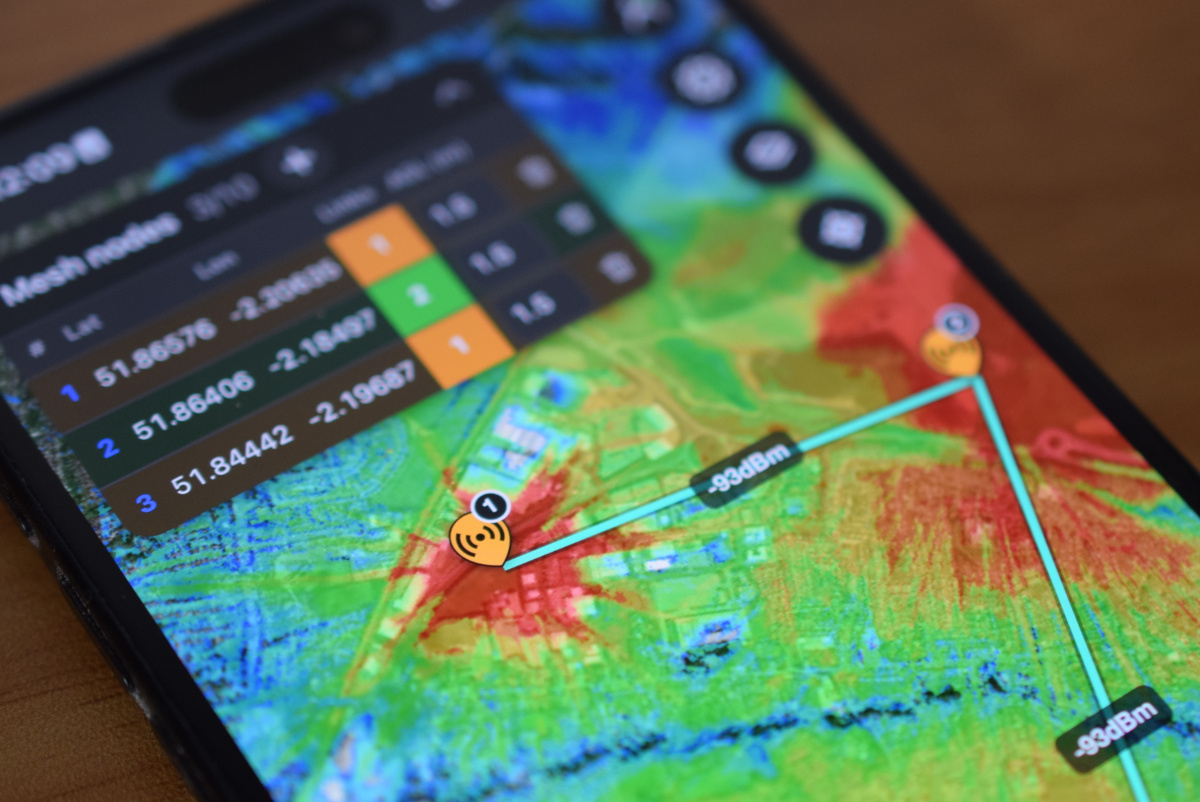
Here’s our plan for migrating to new interfaces next year:
Deprecating old interfaces
We’ve made a lot of interfaces on top of our powerful API. Some are more successful than others so we’re going to retire older interfaces to focus effort on the new ones. The API, as the foundation of our business, will endure.
Three interfaces are due to be retired at the end of 2027: The primary web ‘Engineer’ interface will be replaced by the project (PNUT) interface which debuted this summer. There will be a transition of features in the coming months.
The 3D Phase tracing interface will be added to the project interface so we have a single web interface for indoor and outdoor simulation.
The SOOTHSAYER ATAK plugin will be retired and the source code archived on Github for the benefit of developers. It served its purpose as there’s now multiple ATAK plugins out there built with our API.
Interface naming
We’ve played with names over the years and in recognition of our diverse offering for operators, engineers and developers we have branded our interfaces accordingly and want to retire 2D and 3D labels entirely as 3D is implicit in desktop simulation at least. Removing the 3D Phase tracing interface will simplify this.
Operator interface – Launched in October 2026 (Phones, Tablets)
Engineer interface – Formerly known as the web interface (Web browsers)
Developer’s API – Integrations
Web interface migration
Our flagship “Engineer” web interface has served us well for over 8 years – a long time in software. We’re replacing it with the new Project interface (Nicknamed PNUT) which also uses Cesium as the 3D globe.
The new cross-platform interface offers a large step up in capability as you might expect after so many years and uses our standard modelling APIs which makes development fast. You can read more about the Project interface features in the blog here.
It’s going to be a phased transition of features. Future tutorials and videos will default to the Project interface and we’ll retain all existing documentation until the end of 2027 when it will be archived.
- 2026 Q3 – Project v1 launch
- 2026 Q4 – Project v1.2 (File import). Engineer interface deprecated
- 2027 Q2 – Project v2.0 (Parity with Engineer and Phase Tracing interfaces)
- 2027 Q4 – Migration complete. Project assumes primary CloudRF interface.
- 2028 – Engineer interface removal.

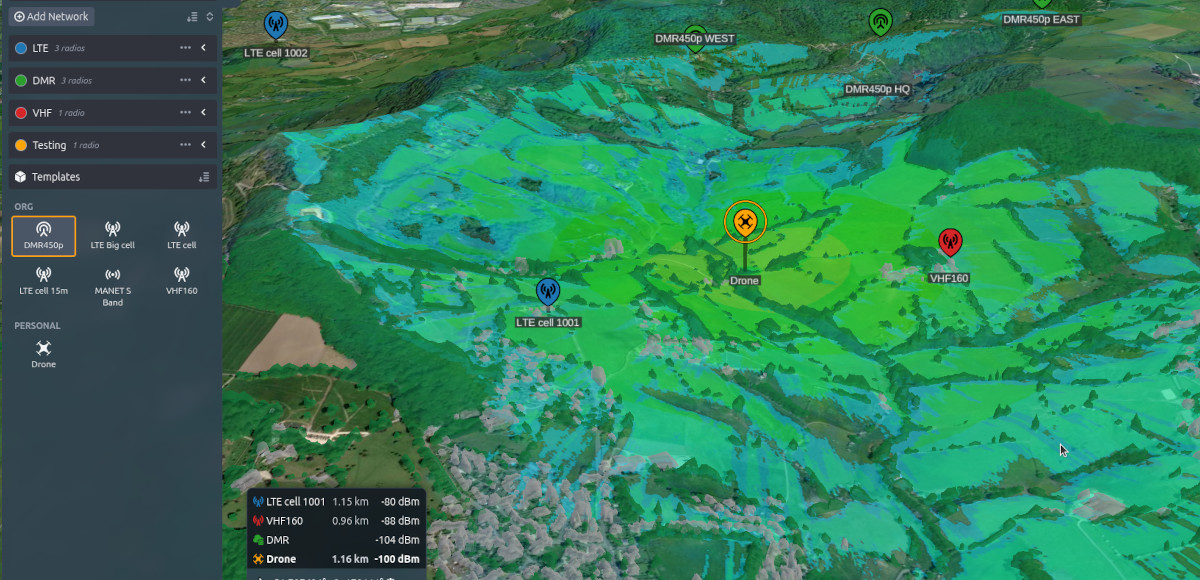
The web interface is supported until the end of 2027. After this, the primary interface will be the Project interface.
It’s time ATAK
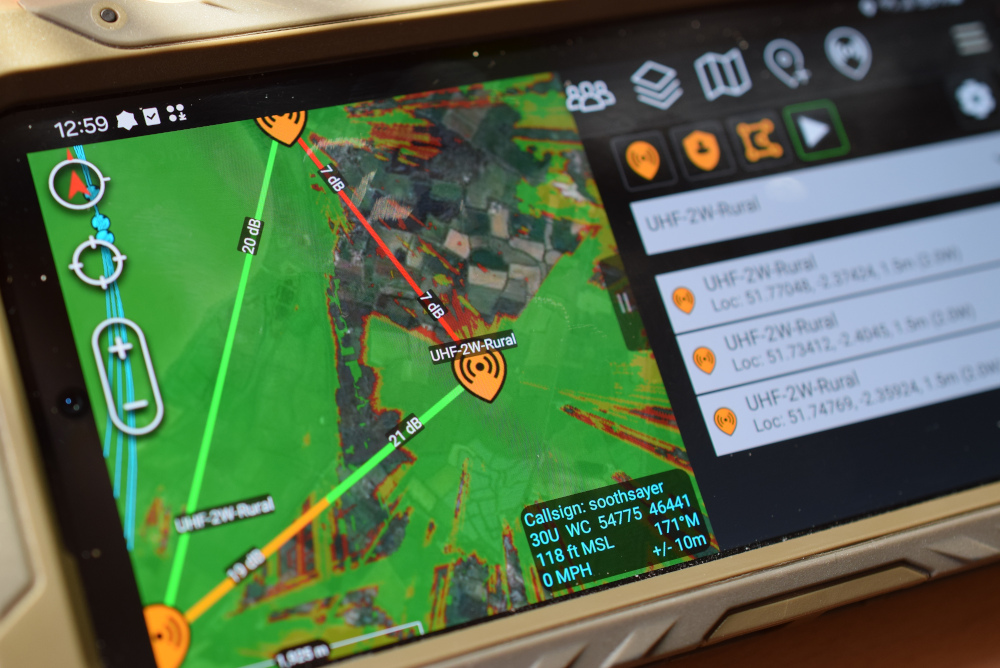
The ATAK plugin has run it’s course unfortunately after a 3 year run. It was useful for marketing our API and edge simulation as a concept but the setup friction for novices is clearly evident in usage statistics: Lots of downloads and little actual use.
We’re replacing the open source plugin with an easier, and cross-platform, operator interface.
We tried to work with the TAK product center to elevate the profile of our plugin but despite community noise, did not have the required sponsorship to be accepted as an official plugin. This was disappointing but not entirely surprising as we did publish a fun hack in 2022 to replace a contractors logo on TAK server with a banana in the most popular Tak server setup script on Github. The logo was removed in a later release.
This was naughty of us but we’ve atoned for it by publishing and documenting multiple plugins and free setup scripts on our Github page to help spread knowledge about TAK. Despite the absurdity of enforced plugin-signing and the Machiavellian behaviour from key community members, it is the most successful common operating picture in history.
The ATAK plugin is supported until the end of 2027. After this, mobile planning will be on the Operator interface.
Bye Phase Tracing, it was short and sweet!
Phase Tracing was launched in 2025 as a developer’s tool to help us explore the 3D API, which was years in development. It was launched with a subset of features to allow novices to explore the phase-tracking our novel voxel based engine was capable of and provide feedback – which wasn’t as good as we had hoped.
Not many people used it. Some publicly mocked it without even trying it which told us we were on to a good thing and bothering the right people – but it would be a long road.
Those who did try it out said coverage was spotty and the defaults were very conservative. Thanks for the feedback.
We developed an XR branch and put it in the bin as it made people sick (and we’re not looking for investment).
We also developed 3D API plugins for Blender and Revit design software which are unaffected by this.
The 3D modelling capability will move to the Project interface in 2027 where users will be able to perform indoor multi-path simulation as part of a larger project, using existing APIs.
We’ve been working on the upgrade and will launch it in due course, or when someone gets in our lane.
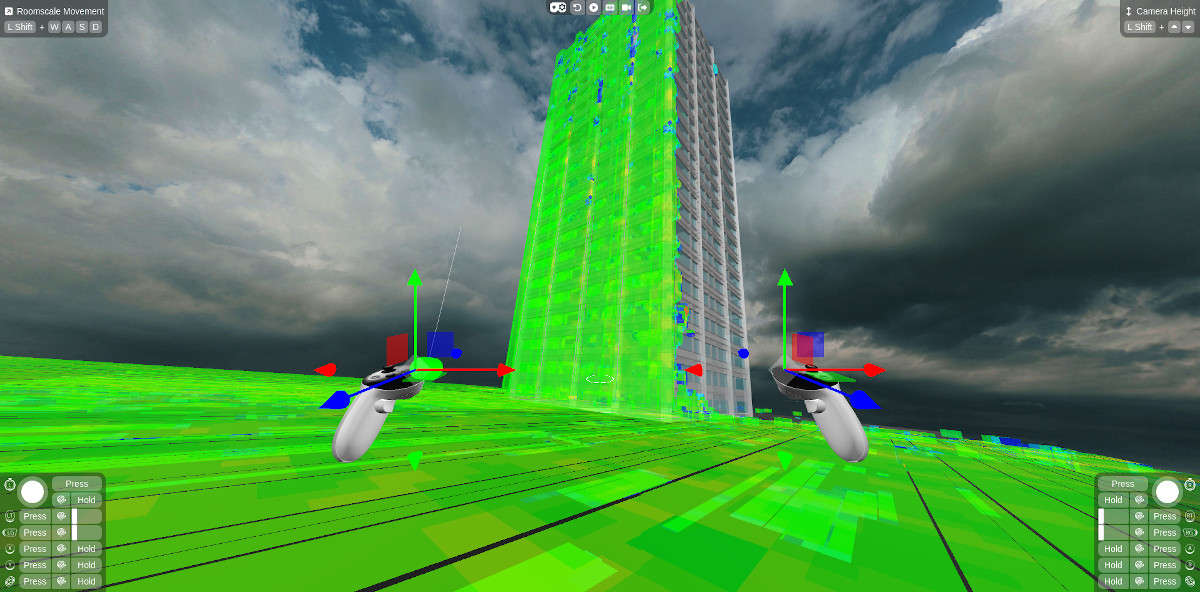
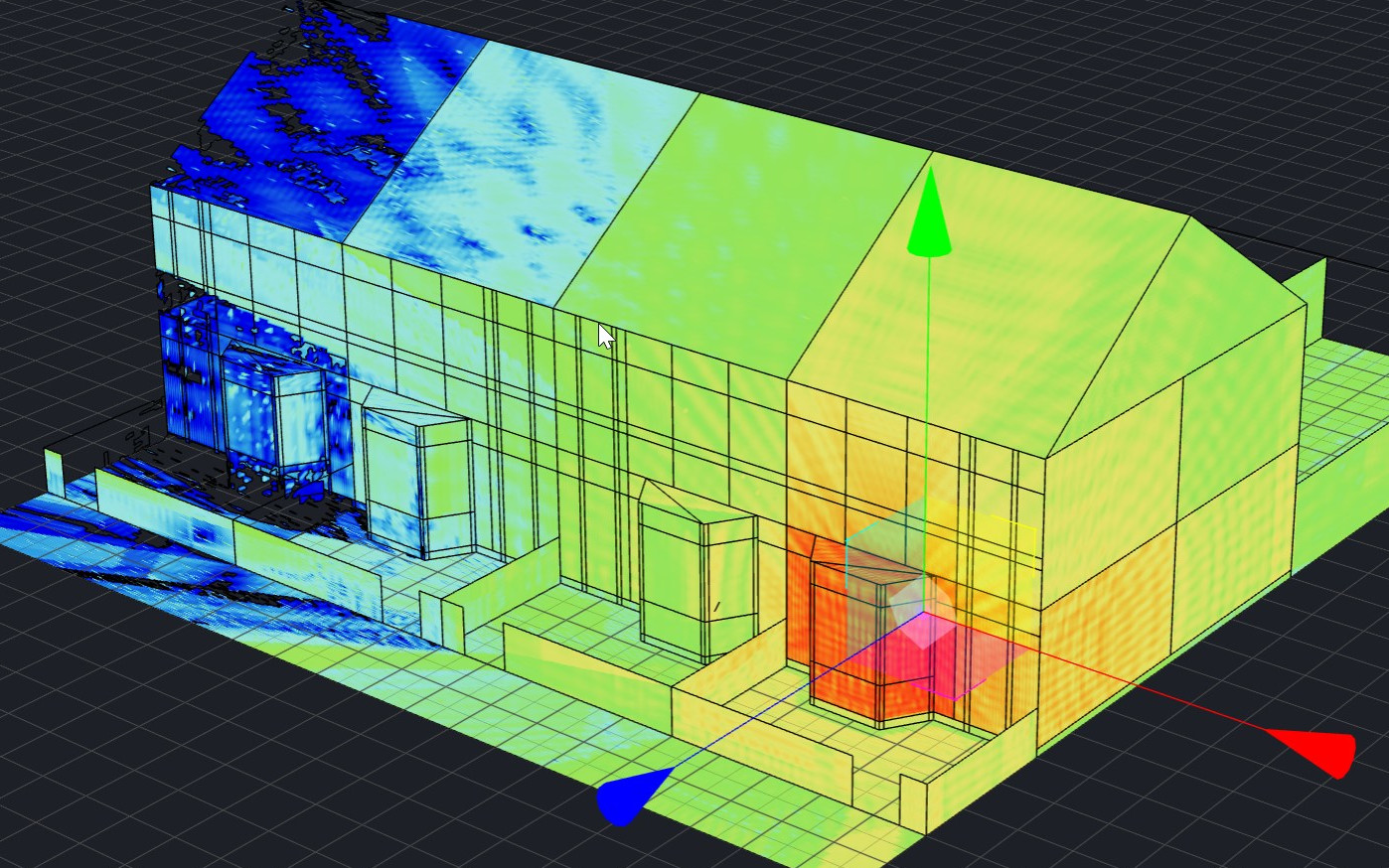
Phase Tracing interface is supported until the end of 2027. After this, indoor modelling will be done in the project interface.
Summary
Our APIs are not going anywhere.
Interfaces will evolve and we will support more devices, more operating systems and offer both indoor and outdoor planning in a single cross-platform interface.